Show's Over, Controller Down: The Very Real Emotional Hangover of Finishing Something You Loved
Show's Over, Controller Down: The Very Real Emotional Hangover of Finishing Something You Loved
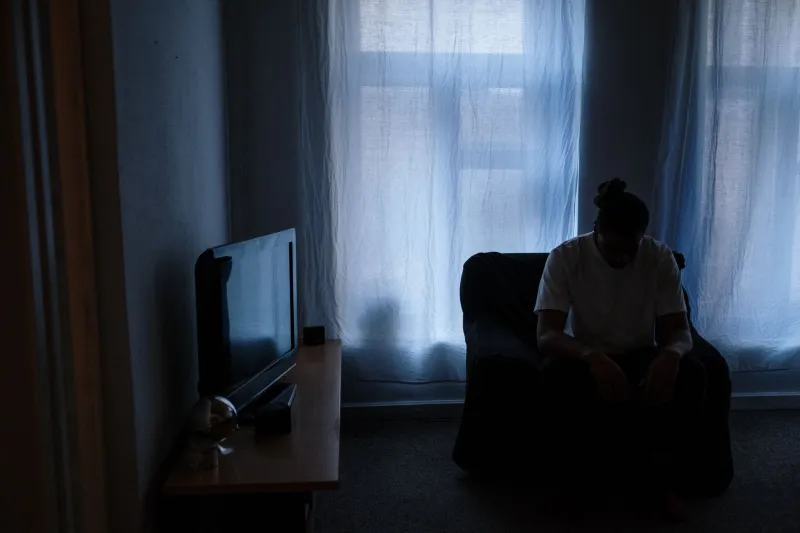
It hits you somewhere between the final frame and the autoplay countdown. Ten seconds before the streaming service tries to shove a completely unrelated show into your eyeballs, you realize: it's over. That world you lived in — the characters you rooted for, argued about online, and low-key named a houseplant after — is gone. Not cancelled. Finished. Which, weirdly, almost makes it worse.
This isn't a you problem. This is a brain problem. And it turns out the entertainment industry has been quietly building casinos around that brain problem for years.
Your Brain Doesn't Know It's Fake (Sorry)
Here's the uncomfortable neuroscience truth: your gray matter is genuinely terrible at distinguishing between real relationships and fictional ones. Researchers call it "parasocial interaction" — the one-sided emotional bond humans form with characters, celebrities, and even fictional universes. When you're deep into a great series or an emotionally rich game, your brain is releasing oxytocin, dopamine, and cortisol in patterns nearly identical to what happens during real social bonding.
So when it ends? Your brain registers something close to actual loss. The neurological reward loop that kept you hitting "next episode" or grinding one more dungeon simply... stops. No more hits. No more dopamine drip. Just you, a remote, and the hollow feeling that nothing else on your watchlist is going to scratch that particular itch.
Psychologists have a clinical-adjacent term for this: post-series depression. It's not listed in the DSM (yet), but therapists report hearing about it constantly, and Reddit communities dedicated to specific shows regularly fill up with posts that read like grief journals the week after a beloved series wraps.
The Fan Communities That Get It
Spend five minutes in any major fandom subreddit after a series finale and you'll see it in real time. After Succession ended, r/SuccessionTV looked like a digital wake. After The Last of Us season one wrapped, gaming-adjacent communities flooded with people who'd already played the source material but somehow felt the loss again through the show. When Severance drops a season finale and disappears back into the Apple TV+ vault, the discourse doesn't die — it just transforms into anxious waiting.
Fans describe the feeling in remarkably consistent ways: a sense of directionlessness, an inability to start something new because it "won't be the same," and a compulsive urge to rewatch from the beginning almost immediately. Sound familiar? That's not a character flaw. That's a parasocial withdrawal response with a side of narrative grief.
Gaming communities know this feeling just as well. Finishing Red Dead Redemption 2 is practically a rite of passage that ends with players sitting in stunned silence on the epilogue ranch, not quite ready to return to the main menu. The Mass Effect trilogy has entire support ecosystems built around helping players cope with the ending. Multiple endings. All of them, somehow, devastating.
The Industry Knows Exactly What It's Doing
Here's where it gets a little spicy. Entertainment companies — streaming platforms, game studios, IP factories — are not unaware of this phenomenon. They're banking on it. Literally.
The modern entertainment business model is no longer built around selling you a story. It's built around selling you a universe — one that never fully closes, never lets you put the controller down for good, and always has another door to open. Think about how aggressively streaming platforms push spin-offs, prequels, and extended universe content the moment a flagship show ends. That's not creative ambition. That's retention strategy wearing a writer's room as a costume.
Disney+ is perhaps the most transparent example of this architecture. The Marvel and Star Wars content pipelines exist, at least in part, to ensure that no emotional save file ever goes cold. Finished WandaVision? Here's Doctor Strange 2. Done with The Mandalorian? Meet Ahsoka. The universe expands not because every story needs to be told, but because every emotional attachment is a recurring subscription justification.
Game studios have perfected their own version. The live-service model — where games like Fortnite, Destiny 2, and Diablo IV are never technically "finished" — exists precisely to prevent the emotional flatline that follows completion. You can't experience post-game depression if the game never actually ends. Genius, if a little sinister.
Monetizing the Emptiness
The gap between finishing something and finding the next thing is prime real estate for entertainment companies. Merchandise drops timed to finales. Soundtrack releases. Behind-the-scenes content. Companion podcasts. Video essays. Official "rewatch" podcasts hosted by cast members. All of it is designed to extend the emotional half-life of your attachment — and keep you inside the branded ecosystem while you're most vulnerable to spending.
Streaming platforms know that the post-binge window is when subscribers are most likely to cancel. If they can fill that void with related content — even low-effort related content — they dramatically improve retention. It's the entertainment equivalent of keeping someone at the slot machine by offering them a free drink.
Game publishers have the battle pass. The DLC. The "game of the year" edition that drops six months later with content specifically designed to pull lapsed players back into the grief cycle. It works. The numbers say it works. And it will keep working as long as humans are neurologically incapable of not caring about fictional people.
So What Do You Actually Do With This Information?
Honestly? There's no cheat code for the post-series crash. You can't skip the emotional loading screen. What you can do is recognize it for what it is — a completely normal human response to narrative loss — and stop letting entertainment companies exploit that vulnerability on autopilot.
Maybe the next time you finish something great, you sit with the feeling instead of immediately rage-subscribing to a new platform to chase the high. Maybe you revisit something you already love rather than panic-starting five new shows in a weekend. Maybe you read the book the show was based on, or play the game that inspired the series, and find that the universe you loved was always bigger than one screen.
Or maybe you just rewatch the pilot with fresh eyes, knowing everything that's coming, and cry at all the parts you didn't cry at the first time.
That's valid too. Play News Desk won't judge you. We're still not over Firefly, and that ended in 2003.
The emotional save file is always open. The industry just charges a monthly fee to access it.