Cable TV Is the Final Boss and Gen Z Already Has the Strategy Guide
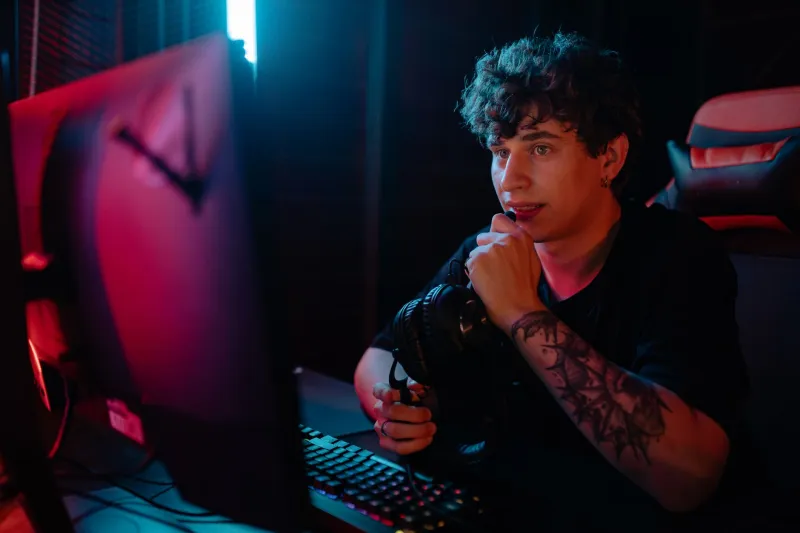
Let's be honest: cable TV has been playing on the easiest difficulty setting for decades. Captive audiences. Limited alternatives. A monthly bill that crept up like a slow-burn horror movie nobody asked to watch. Then Gen Z loaded up the game, skipped the tutorial, and immediately started speedrunning straight to the final boss fight.
Spoiler: cable is losing. Badly.
The Cord-Cutting Scoreboard Looks Ugly for Legacy TV
The stats aren't just trending in one direction — they're in freefall for traditional television. According to data from eMarketer, the US pay-TV subscriber base has been hemorrhaging millions of accounts annually, with 2024 marking yet another record year of cancellations. Among adults aged 18 to 27, the numbers are almost comically one-sided. A 2024 Pew Research report found that fewer than one in five Gen Z adults in the US considers linear cable TV a regular part of their media diet. One in five. That's not a demographic shift. That's a demographic rout.
And here's the kicker: many of them never had cable to begin with. They didn't "cut" anything. They just... never plugged in. For a generation that grew up with a YouTube account before they had a driver's license, the idea of scheduling your evening around a network's programming grid sounds roughly as intuitive as rewinding a VHS tape.
Twitch and YouTube Aren't "Alternatives" Anymore — They're the Main Event
Ask a 22-year-old what they watched last night and there's a decent chance the answer involves a Twitch streamer playing a game you've never heard of, a YouTube essay about a movie you forgot existed, or a 47-part series on a topic so niche it would have been a footnote in a cable documentary. That's not a criticism — that's genuinely where the culture lives now.
Twitch alone averages over 30 million daily visitors in the US, with peak viewership events — major game launches, esports championships, viral "just chatting" moments — routinely pulling numbers that rival cable news primetime. YouTube, meanwhile, has become something that defies easy categorization. It's a search engine, a streaming platform, a podcast network, a live TV replacement, and somehow also the place where you watch a guy build a medieval castle in his backyard. All at once.
For Gen Z, these aren't supplements to "real" TV. They ARE real TV. The algorithm is their programming director, and it's significantly better at its job than any network executive who greenlit another procedural crime drama.
The Second Screen Became the First Screen (And the Third)
Here's where it gets genuinely fascinating from a media behavior standpoint. Gen Z isn't just watching differently — they're watching more things simultaneously in ways that would give a 1990s media researcher a migraine.
The "second screen" phenomenon, where viewers browse their phones while watching TV, has fully inverted for this generation. The game is the primary screen. The stream is the primary screen. Whatever's firing up Discord notifications is the primary screen. If anything, the television in the background is the ambient experience — something to glance at between rounds of a multiplayer session or during a loading screen.
This gaming-first media posture is reshaping what "watching" even means. Interactive content, choose-your-own-adventure streaming experiments, and live-event broadcasts tied to in-game moments are all attempts by media companies to meet Gen Z where their attention actually lives. Netflix's interactive content experiments, however mixed the results, weren't accidents. They were panic moves dressed up as innovation.
Legacy Media's Scramble Is Real and Slightly Painful to Watch
Big media companies aren't oblivious. They're just slow, expensive, and structurally allergic to the kind of pivot that Gen Z's habits demand. The response has been a fascinating mix of genuine adaptation and deeply awkward overcorrection.
Every major network now has a streaming arm, which is table stakes at this point. But the more telling moves involve gaming. Paramount has leaned into live esports content. ESPN has made increasingly loud noises about streaming gaming events alongside traditional sports. Even HBO Max — sorry, Max — has experimented with interactive viewing experiences tied to major IP releases.
Then there are the live event plays. The Super Bowl streaming numbers. The Oscars' desperate social media campaigns. The Grammy performances engineered specifically to go viral on TikTok before the show even ends. Legacy media has figured out that Gen Z will show up for moments, just not for scheduled programming. So they're in the business of manufacturing moments now, which is essentially admitting that Twitch streamers had the right idea all along.
 Photo: Super Bowl, via i2-prod.mirror.co.uk
What Primetime Even Means Anymore
Here's the philosophical gut-punch buried in all of this: "primetime" as a concept is dissolving. The 8-to-11 PM Eastern block that defined American TV culture for half a century is now just... a time of day. Gen Z's primetime is whenever a favorite streamer goes live, whenever a game's new season drops, whenever a YouTube video finally gets the algorithm push it deserved three weeks ago.
This isn't chaos — it's personalization at a scale the broadcast era couldn't have imagined. But it does mean that the shared cultural experience of "did you see that thing on TV last night" has fractured into a million parallel conversations happening in Discord servers, Reddit threads, and group chats.
Cable TV's final boss fight isn't going to end with a dramatic death cutscene. It's going to end the way most losing strategies do — quietly, with a gradual failure to remain relevant until one day you realize you haven't thought about it in months.
Gen Z didn't need a cheat code to win this one. Cable just forgot to patch its own vulnerabilities.
And in gaming, we all know what happens to the boss who never updates.